



Street Knowledge

Designing A Design Process

The rapid urbanization of the 21st century introduces both vast opportunities and new challenges to cities worldwide. Waves of migration and immigration, climate change, technological disruptions, inequality and affordability, are only some of the questions urban decision-makers are facing today. As these challenges grow, traditional urban processes are rendered insufficient: Slow planning and decision-making processes lag behind rapidly expanding cities; static regulations struggle with volatile economies; technological disruptions outpace legacy urban systems.

In this course we will explore how human-centered design processes coupled with modern technologies can support urban design in the 21st century. Students will learn about, and later propose a systematic, scalable, evidence-based and data-driven urban design strategy, while emphasizing a public-facing, community-driven, and participatory planning process.

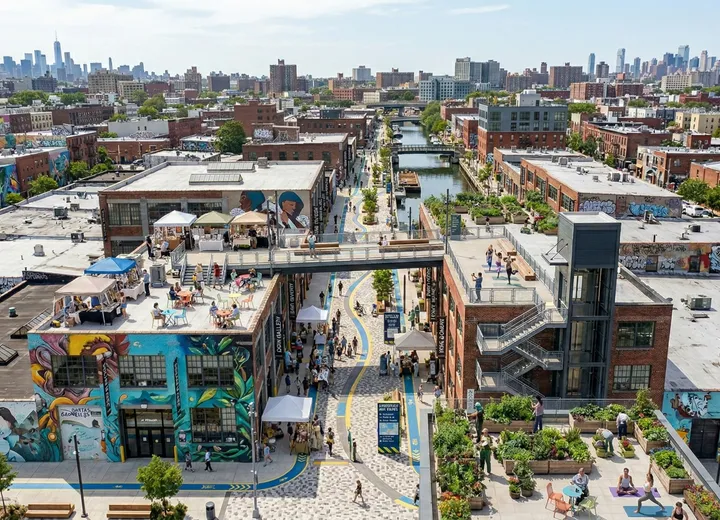
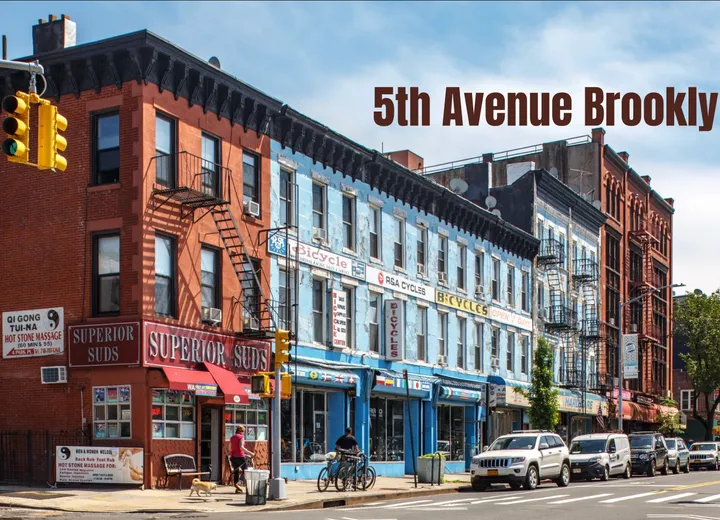
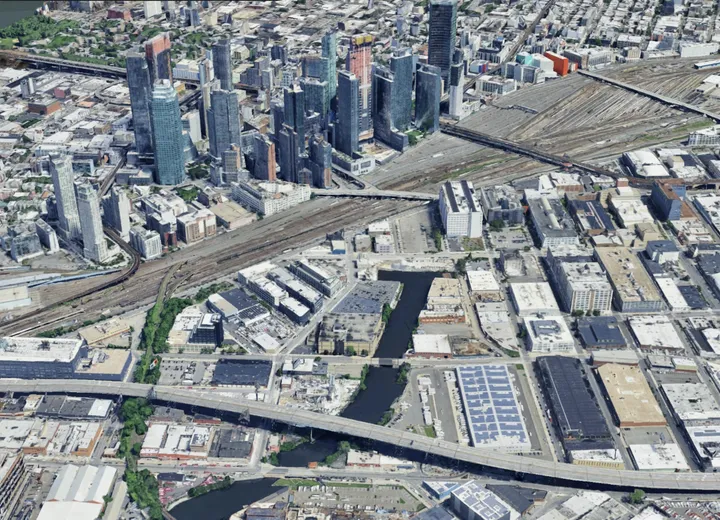
A semester-long group project will focus on New York City’s Business Improvement Districts (BIDs). In their projects, students will be asked to touch upon urgent urban challenges such as sustainability, infrastructure, resiliency, mobility, affordability, access, and equity, to name a few. Each team will propose forward-thinking and technologically driven design approaches to a selected site.

Read more Click to open/close

Insight

Understanding the current state of the city, neighborhood, and site

  • Performing data collection, generation, or augmentation, using real-time spatial data, public or private APIs, emphasizing new and unconventional datasets
  • Developing an urban analytics strategy, and communicating it via mapping, urban observatories, and data visualization methods

Transformation

Proposing methods and tools for an iterative and collaborative design process

  • Explore alternative urban interventions and feasibility analysis of scenarios
  • Evaluate applicability, usability, accessibility, and impact on future design and decision-making process

Prediction

Assessing the implicit aspect of urban change

  • Develop urban forecasting methods, such as impact on demographics, human behavior, urban mobility, and access
  • Utilize optimization methods, simulations, agents modeling, generative AI to explore, non-trivial, subtle and experiential impact of proposed interventions

Consensus

Designing build public-facing processes for collaborative decision-making

  • Facilitate a range of stakeholders, communities, experts and non-experts in the design and decision making process
  • Evaluate societal, cultural, and political outcomes and tradeoffs, short-and-long term effects, via feedback loops and repeated engagement

Course Structure

The course will be a mix of talks, hands-on workshop, presentations, site visits, and group discussions. We will aim to create a design-studio and hands-on experience, including charrettes, public reviews and pinups, as well as constructive feedback.

  • Groups of students will form to propose a semester-long project divided into segments (see “Assignments”)
  • Each session is designed to build expertise and expand the students' representation, technical and thematic toolbox, teamwork and design thinking skills
  • The course will be held in person. Some sessions might be held off-campus, please confirm with course schedule and instructors

Intended Learning Outcomes

By the end of this workshop, students will learn and have hands-on experience with the multidimensional drivers that shape urban design today. The course will teach students how to analyze, transform, project, and communicate change in urban environments.

  • Craft an urban-design challenge statement for a NYC site
  • Recognize the spatial, temporal and other data sources necessary to address these challenges
  • Understand local, governmental, and other stakeholders involvement in the design process
  • Describe how models and simulations can be used to evaluate urban interventions
  • Outline the process to build collaborative urban decision-making processes

Projects

Student work from current and past course iterations.

Team

Instructors and teaching team.

Ariel Noyman, PhD

Course Instructor

Arch. Ariel Noyman PhD, is an urban scientist, working in the intersection of cities and technology. His research is on novel methods of urban modeling and simulation, and the democratization of data-driven design processes. Noyman led and helped establish a worldwide network of City Science Living-Labs, in Hamburg, Andorra, Shanghai, Helsinki, and most recently in the Negev, in an effort to confront his research with real-world challenges. Noyman's work received awards from the European Commission, the OECD, the Chinese and the Israeli Gov., was featured by The Guardian, 60 Minutes, The New York Times and was displayed in exhibitions, conferences and summits worldwide. Today, Noyman is a Research Scientist at the MIT City Science Group, and a lecturer at MIT, Northeastern University, and Bezalel Academy Bezalel Academy in Jerusalem. Before coming to MIT, Noyman practiced architecture, urban design, and city planning for over a decade in the US and EMEA. Noyman holds a PhD and a Master of Science from MIT, and a Bachelor in Architecture (cum Laude) from Bezalel Academy in Jerusalem.

Matt Franchi

TA & Mentor

Matt Franchi is a Computer Science PhD Candidate at Cornell University’s New York City campus, Cornell Tech, where he is advised by Wendy Ju and Helen Nissenbaum. His research focuses on urban visual analytics and ethical artificial intelligence. He completed his bachelor’s degree in computer science at Clemson University, and previously served as a research fellow at Hayden AI Technologies and the Design Trust for Public Space. His research is supported by the Cornell Tech Urban Tech Hub, Cornell Dean’s Excellence Fellowship, the Siegel PiTech PhD Impact Fellowship, and the Digital Life Initiative Doctoral Fellowship. Franchi’s research has garnered coverage in outlets including The New York Times, The Economist, New York Post, Gothamist, and local NYC news networks. Beyond his academic pursuits, he is also a musician who plays and composes classical and neoclassical piano music.

Guest Mentors

  • Eyal Feder-Levy | Co-founder and CEO of Zencity
  • Sagi Golan | Deputy Director of Urban Design, NYC Department of City Planning
  • Arnaud Grignard | Researcher at the French National Research Institute for Sustainable Development (IRD)
  • Andrea Parker | Executive Director, Gowanus Canal Conservancy
  • Emily C. Bell | Gowanus Canal Conservancy
  • Star Childs | Founder, Ginkao
  • Ryan Hardesty Lewis | PhD student, MIT
  • Kobi Ruthenberg | Partner at ORG